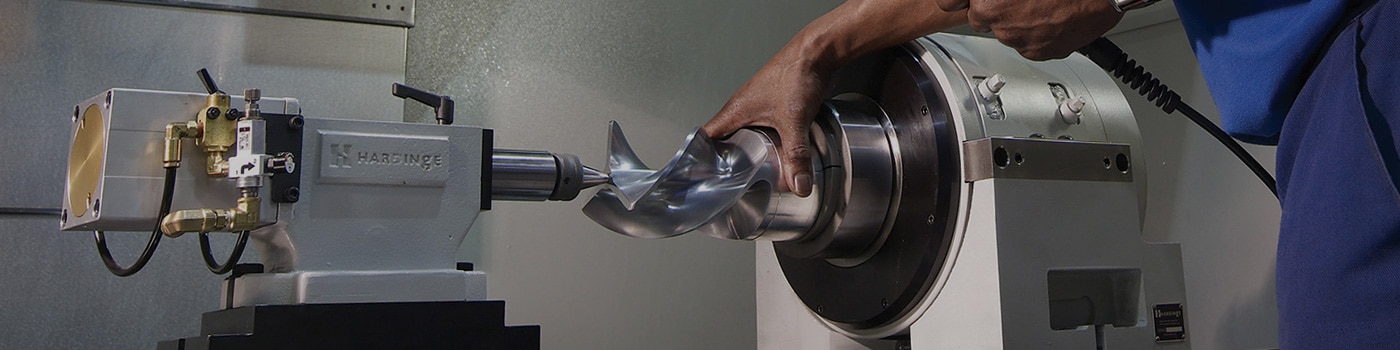
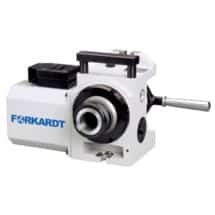
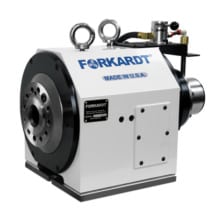
A rotary indexer is a type of automated machinery or device used in manufacturing and industrial applications to precisely position and rotate workpieces or components at specific angles or intervals. It is a critical tool in various industries such as automotive, aerospace, electronics, and machining, where precise and controlled rotation of parts is required for tasks like drilling, milling, welding, inspection, assembly, and more.
Here are some key characteristics and functions of rotary indexers in manufacturing:
Rotation: Rotary indexers are designed to rotate workpieces or tooling to a predefined angular position, typically in increments of fixed degrees (e.g., 90 degrees, 180 degrees, 360 degrees). This rotation can be continuous or intermittent, depending on the application.
Precision: Rotary indexers are known for their high precision and repeatability, ensuring that each workpiece is accurately positioned and held in place during processing. This precision is crucial for maintaining product quality and consistency.
Versatility: They come in various designs, including cam-driven indexers, servo-driven indexers, and pneumatic indexers, allowing manufacturers to choose the type that best suits their specific needs.
Automation: Rotary indexers are often integrated into automated production lines and CNC (Computer Numerical Control) machining centers to increase efficiency and reduce manual labor. They can be controlled programmatically to coordinate with other machines and processes.
Fixturing: Workpieces or tooling are typically mounted on a fixture or rotary table attached to the indexer. The design of the fixture depends on the specific manufacturing process and the geometry of the parts being processed.
Indexing Tables: Rotary indexers are sometimes referred to as indexing tables, and they come in various configurations, such as single-axis (1-axis), dual-axis (2-axis), and multi-axis (3-axis or more) indexers. Multi-axis indexers can perform complex rotational movements and orientations.
Applications: Rotary indexers are used in a wide range of manufacturing processes, including machining (milling, drilling, grinding), assembly (automotive assembly lines), inspection (quality control), packaging (bottle labeling), and welding (automated welding cells), among others.
Control: Modern rotary indexers are often equipped with advanced control systems, such as PLCs (Programmable Logic Controllers) and CNC controllers, to precisely manage the indexing process, speed, and synchronization with other equipment.
Rotary indexers play a crucial role in manufacturing by providing controlled and precise rotation of workpieces or tooling, enabling automation, improving efficiency, and ensuring consistent product quality in various industries. Their versatility makes them a valuable asset in a wide range of applications.